Nội dung chính
Syria’s cease‑fire, signed earlier this week, is already collapsing as the Syrian army stormed Sheikh Maksoud in Aleppo.
Background: Ceasefire and Kurdish foothold in Aleppo
The truce announced at the start of the week was intended to halt fighting between the Syrian government and Kurdish militias that have controlled parts of Aleppo’s Sheikh Maksoud district since the 2011 uprising. President Ahmed al‑Sharaa has repeatedly pledged a “single‑state” solution, yet Kurdish leaders fear marginalisation under a Baghdad‑style centralisation.
Syrian army’s operation on 10 January
On 9 January the Syrian Armed Forces launched a ground offensive aimed at expelling Kurdish fighters from the district. By 10 January the army claimed it had “swept” the area, stating that 90 % of the residential neighbourhoods were now under government control, although it admitted “a few armed elements remain hidden.”
Kurdish forces deny loss, vow resistance
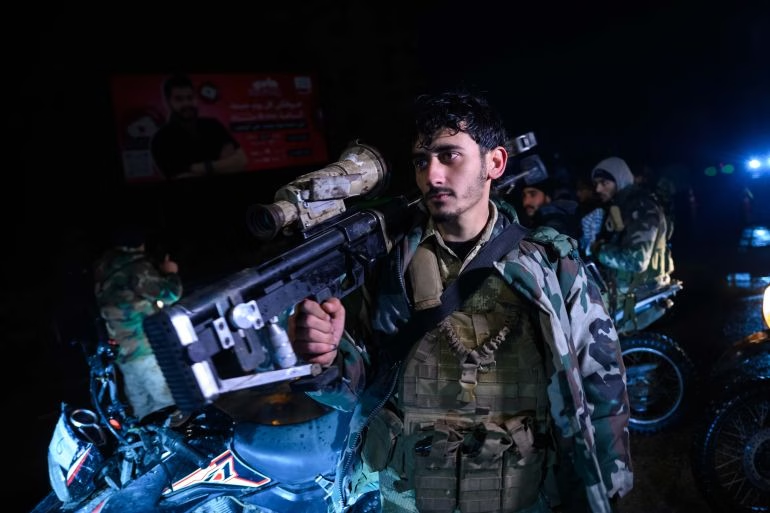
In a written statement broadcast by Al Jazeera, Kurdish representatives refuted the government’s claim, labeling it “false and misleading.” They insisted that they continue to resist and have not withdrawn from the last stronghold in Sheikh Maksoud.
Regional diplomatic moves
U.S. envoy Tom Barrack posted on X on 10 January that he had met Jordanian Foreign Minister Ayman al‑Safadi in Amman to reinforce the cease‑fire and to encourage Kurdish forces to pull back from Aleppo peacefully. The dialogue underscores the fragile balance between Washington, Jordan and Damascus amid the broader Middle‑East power‑play.
Analysts warn that if the Syrian army solidifies its control over Sheikh Maksoud, it could mark the end of Kurdish self‑administration in Aleppo – a development that may reshape the power map of northeastern Syria, where Kurdish‑led autonomous structures still exist.
Stay tuned for further updates as the situation evolves.